Growth Mindset for Kids: Building Resilience Through Positive Thinking
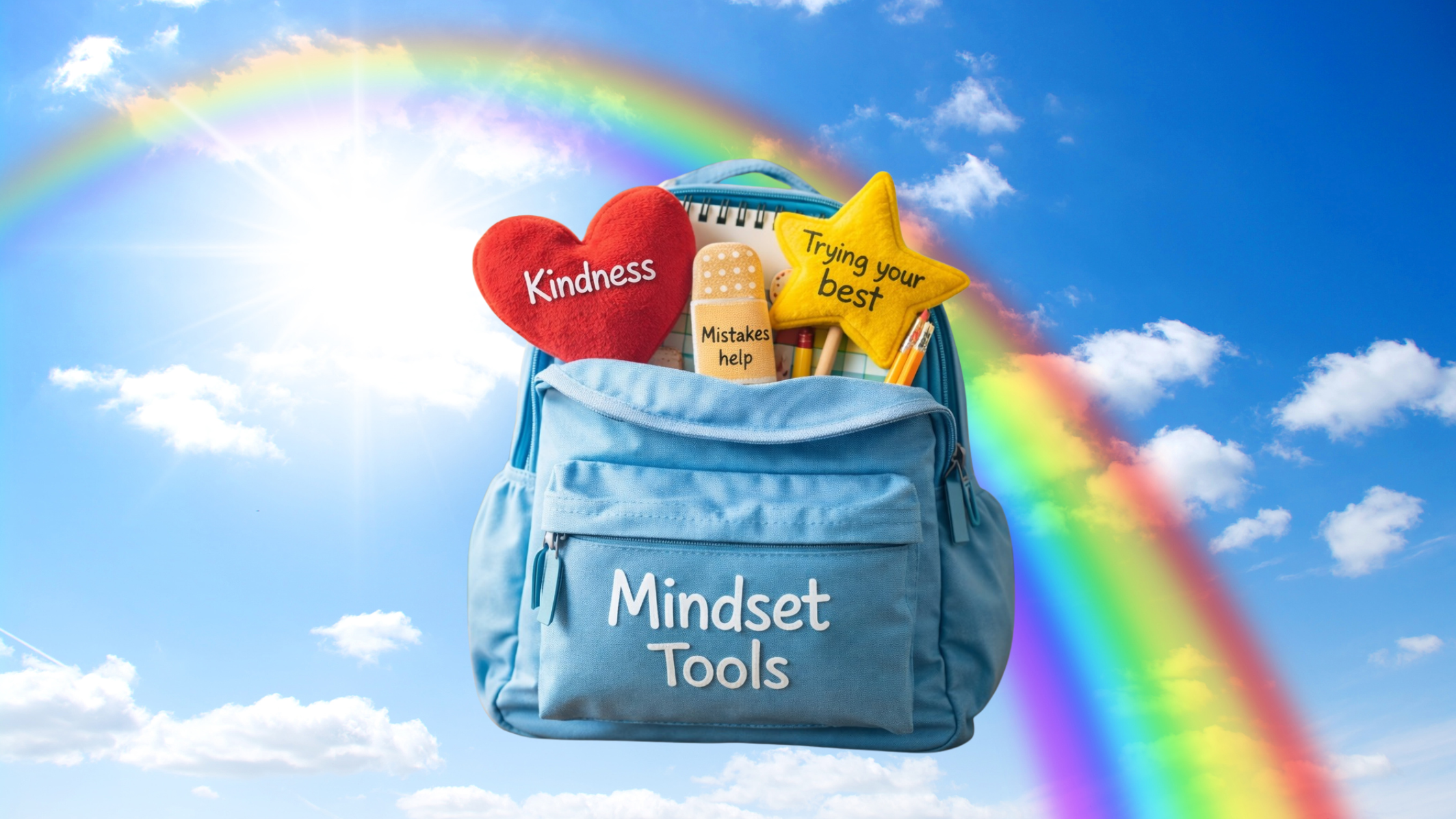
A growth mindset for kids helps children believe they can learn, grow, and improve through effort and practice. Instead of fearing mistakes, children with a growth mindset see challenges as opportunities. As we continue our January focus on positive mindset, we are exploring how positive thinking helps children build resilience, confidence, and perseverance.
When children learn early that tough moments do not define them, they develop skills that support emotional strength for life.
🌟 Why a Growth Mindset for Kids Builds Resilience
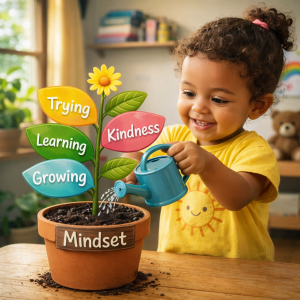
A growth mindset for kids does not mean pretending everything is easy. Instead, it teaches children that challenges are part of learning. According to Haley Droste, MSW, LCSW, positive thinking helps children handle stress and setbacks in healthier ways. Research shared by the Mayo Clinic also shows that positive thinking supports emotional resilience, coping skills, and overall well-being.
When children believe they can improve, they are more likely to try again after a mistake. Over time, this builds confidence and reduces frustration. Rather than giving up, children learn to pause, reflect, and keep going.
💛 How Positive Thinking Helps During Hard Moments
Every child experiences disappointment. However, a growth mindset helps children understand that hard moments are temporary. For example, a child who spills juice or struggles with a puzzle can learn to say, “I can try again,” instead of “I can’t do this.”
When adults model calm reactions and positive language, children learn by watching. As a result, children begin to replace negative thoughts with hopeful ones. This simple shift can make a big difference in how children respond to everyday challenges.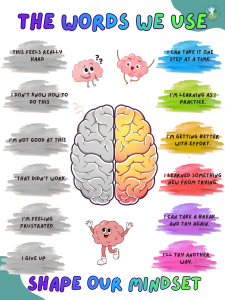
🏠 Bringing a Growth Mindset for Kids Home
A key part of building a growth mindset for kids is teaching them that learning takes time. One powerful word that helps children shift their thinking is “yet.”
When children say:
-
“I can’t do this,”
we can gently help them reframe it to: -
“I can’t do this yet.”
That small word makes a big difference. It reminds children that skills grow with practice and effort. Instead of feeling stuck or discouraged, children begin to see challenges as something they can work through over time.
Research on growth mindset shows that children who believe their abilities can grow are more willing to try new things and stick with tasks that feel hard at first. According to psychologists who study mindset, children who use growth-oriented language like “yet” are more likely to stay motivated and bounce back from mistakes.
At AMC, we model this language every day. When a child is frustrated while learning to zip a coat, write their name, or build a tower, we might say:
-
“You’re still learning — you haven’t mastered it yet.”
-
“It’s tricky now, but you’re getting closer.”
Over time, children begin to use this language themselves. They learn that mistakes are not failures — they are part of learning. This helps children build confidence, patience, and resilience that will support them far beyond the classroom.
🌟 Why This Matters in Early Childhood
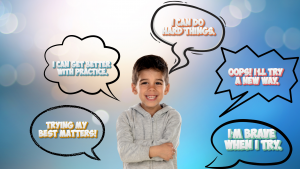
Early childhood is when children form beliefs about themselves. Teaching a growth mindset for kids helps children feel capable and supported. When children believe effort matters more than perfection, they are more willing to learn, try new things, and ask for help.
These skills do not disappear as children grow. Instead, they become the foundation for lifelong resilience✨.
📖 Learn More:
Tiffany Sauber Millacci, Ph.D., How to Nurture a Growth Mindset in Kids
https://positivepsychology.com/growth-mindset-for-kids/