
Summer is a wonderful time for young children to enjoy water play—whether it’s bath time, sprinklers, kiddie pools, or family trips to the beach. Water safety for young children is about making sure these happy moments stay safe, so families can relax and enjoy them.
As a daycare company that cares deeply about children and their families, we want to help parents feel confident about simple, practical things they can do to keep little ones safer in and around water.
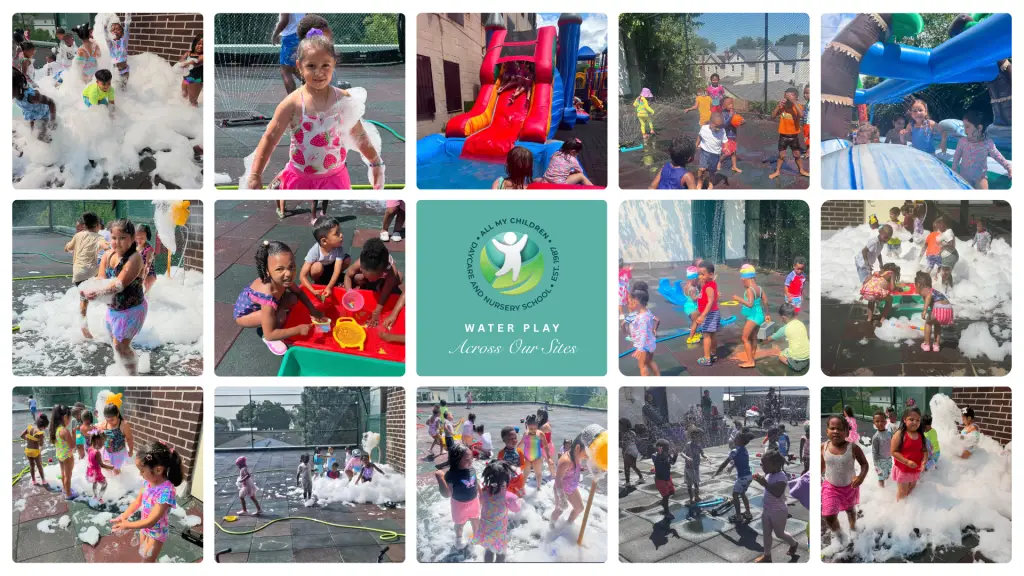
Water safety for young children starts with close, calm supervision
For babies, toddlers, and preschoolers, the most important safety step is having a grown‑up nearby and paying attention. Instead of focusing on scary “what‑ifs,” think of supervision as being present and engaged while your child enjoys water play.
Helpful habits include:
- Staying within arm’s reach of young children in bathtubs, kiddie pools, splash pads, and shallow water.
- Putting phones and distractions aside during water play so your attention is on your child.
- When several adults are together, choosing one “water watcher” at a time who agrees to focus only on the kids and then passing that role to someone else after a few minutes.
This approach helps children feel safe and cared for, and gives parents more peace of mind.
Water safety for young children around the home
Most families have water around the home in more places than they realize, bathtubs, buckets, diaper pails, toilets, wading pools, hot tubs, and even coolers with melted ice. Looking at these everyday spots through a “water safety for young children” lens can help you spot simple changes.
You can:
- Empty and store kiddie pools and buckets upside down after each use.
- Keep bathroom doors and toilet lids closed when they’re not in use.
- Stay with your child throughout bath time and avoid stepping away, even briefly.
- Be mindful of decorative ponds, fountains, or coolers that might attract curious toddlers.
Small changes like these fit easily into your normal routine and help create a safer home environment.
Using fences and floatation wisely
If your family or a relative has a backyard pool, a fence with a self‑closing, self‑latching gate is an important layer of protection. It helps make sure children can’t reach the water without an adult.
For outings on boats or near open water, U.S. Coast Guard–approved life jackets are recommended for children. It’s helpful to remember that floaties, water wings, and inflatable toys are fun, but they’re not safety devices, so they should never replace a life jacket or adult supervision.
Teaching young children simple water safety rules
Children learn best through repetition and calm, simple messages. You don’t need to scare them; just build routines they can understand:
- “We always go near water with a grown‑up.”
- “We walk with careful feet near the pool and splash pad.”
- “We stay where our feet can touch unless a grown‑up says it’s okay.”
- “We listen to lifeguards and follow the pool rules together.”
Over time, these ideas become familiar and help children feel more secure when they play in and around water.
Feeling prepared, not worried
Part of feeling confident is knowing what you would do if something didn’t go as planned. Many parents find it reassuring to:
- Take a CPR and first‑aid class focused on children.
- Keep a phone nearby during water play so help is easy to reach if needed.
- Choose pools and swim areas with lifeguards on duty when possible.
Thinking of these steps as “being prepared” rather than “being scared” helps water safety feel like a positive part of caring for your child.
Safe water play at our NYC daycare centers
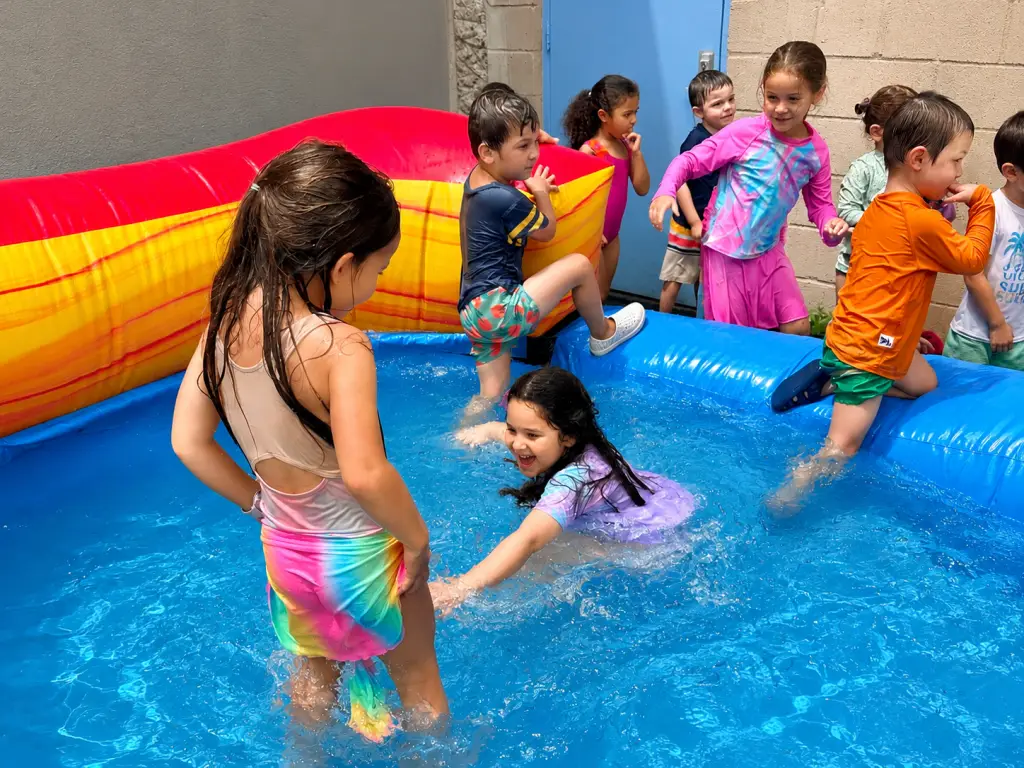
At our daycare centers in Manhattan, Brooklyn, and Queens, we bring the same calm, caring approach to water play that families use at home. Our water activities are age‑appropriate, planned carefully, and supervised closely so children can splash, explore, and learn in a safe environment.
Across our sites, we:
- Offer seasonal water play like sprinklers and water tables with clear routines children can understand.
- Use active supervision and appropriate ratios for all water activities.
- Reinforce gentle safety messages about walking near water, staying with the group, and waiting for a teacher’s permission.
We welcome children from 6 weeks to 5 years old (with some locations starting at 24 months), offer full‑day hours, and accept ACS vouchers, HRA, DOE, and private pay to support different family needs. Families can visit our Locations page to explore our centers in Manhattan, Brooklyn, and Queens and find the best fit.
Read more, if you’d like
If you want additional ideas and research‑based tips written specifically for parents, you can read:
Water Safety for Parents from Johns Hopkins Medicine.
An overview of water safety, home and pool tips, and CPR information for parents and caregivers.
Water Safety and Persistent Misconceptions – Safe Kids Worldwide
A helpful article explaining common myths and practical ways families can keep kids safer around water.