
Positive self-talk for kids is one of the most powerful tools we can teach children to build confidence, manage emotions, and approach challenges with courage 💛. As we welcome January and the start of a new year, AMC is focusing on the value of a positive mindset—helping children believe in themselves and feel capable of trying, even when something feels hard.
According to Michael Vallejo, LCSW, positive self-talk is a child’s inner voice—the way they speak to themselves about their abilities, experiences, and challenges. Every child has this inner dialogue. At times, it sounds encouraging and supportive. At other times, it can be critical or discouraging. When children regularly engage in negative self-talk, such as saying “I can’t do this” or “I’m bad at everything,” it can increase stress and lower confidence. Over time, this inner voice can shape how children approach learning, relationships, and new experiences.

🌟 Why Positive Self-Talk for Kids Matters
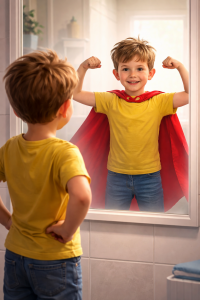
Positive self-talk helps children view themselves in a kinder, more hopeful light. Vallejo explains that when children learn to speak to themselves with encouragement, they are more likely to try new things, persist through challenges, and recover from mistakes. Instead of seeing failure as proof they aren’t capable, children begin to understand that mistakes are a natural part of learning.
Teaching positive self-talk for kids gives children language that supports growth and emotional strength. Simple phrases like “I can try,” “I’m still learning,” or “I can ask for help” help shift a child’s mindset from frustration to problem-solving. These small changes in language can have a big impact on confidence, resilience, and emotional regulation.
This skill is especially important in early childhood, when children are forming beliefs about who they are and what they can do. When adults intentionally model positive self-talk—by speaking kindly about their own efforts and mistakes—children learn to do the same. Over time, this supportive inner voice becomes something children carry with them as they grow.
🏠 Bringing It Home: Try This With Your Child
Supporting positive self-talk at home can be simple and meaningful 💛:
💬 Reframe the Moment:
When your child says something negative, pause and gently help them reframe it.
“I can’t do this” → “This is hard, but I can try.”🌈 Say It Together:
Practice saying encouraging phrases out loud, especially during challenging moments. Hearing the words helps children remember them later.
🎨 Affirmation Art Activity:
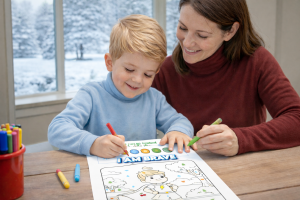
Another fun way to support positive self-talk for kids is through our Color-by-Symbol Positive Affirmations printable. Children follow picture cues—like coloring a cherry red 🍒 or a bear brown 🐻—while reading affirmations such as “I am brave” and “I am kind.” Displaying the finished artwork where your child can see it often helps reinforce positive messages every day ✨.
Positive self-talk doesn’t mean pretending everything is easy. It means reminding children that they are learning, growing, and supported—even when things feel tough 💪💛. With consistent encouragement and simple daily practices, we can help children build a strong, positive mindset that lasts far beyond childhood.
📖 Learn More:
Michael Vallejo, LCSW, Positive Self-Talk for Kids
https://mentalhealthcenterkids.com/blogs/articles/positive-self-talk